
Fire protection without compromise
Safe, reliable, sustainable: ClayTec’s fire protection solutions
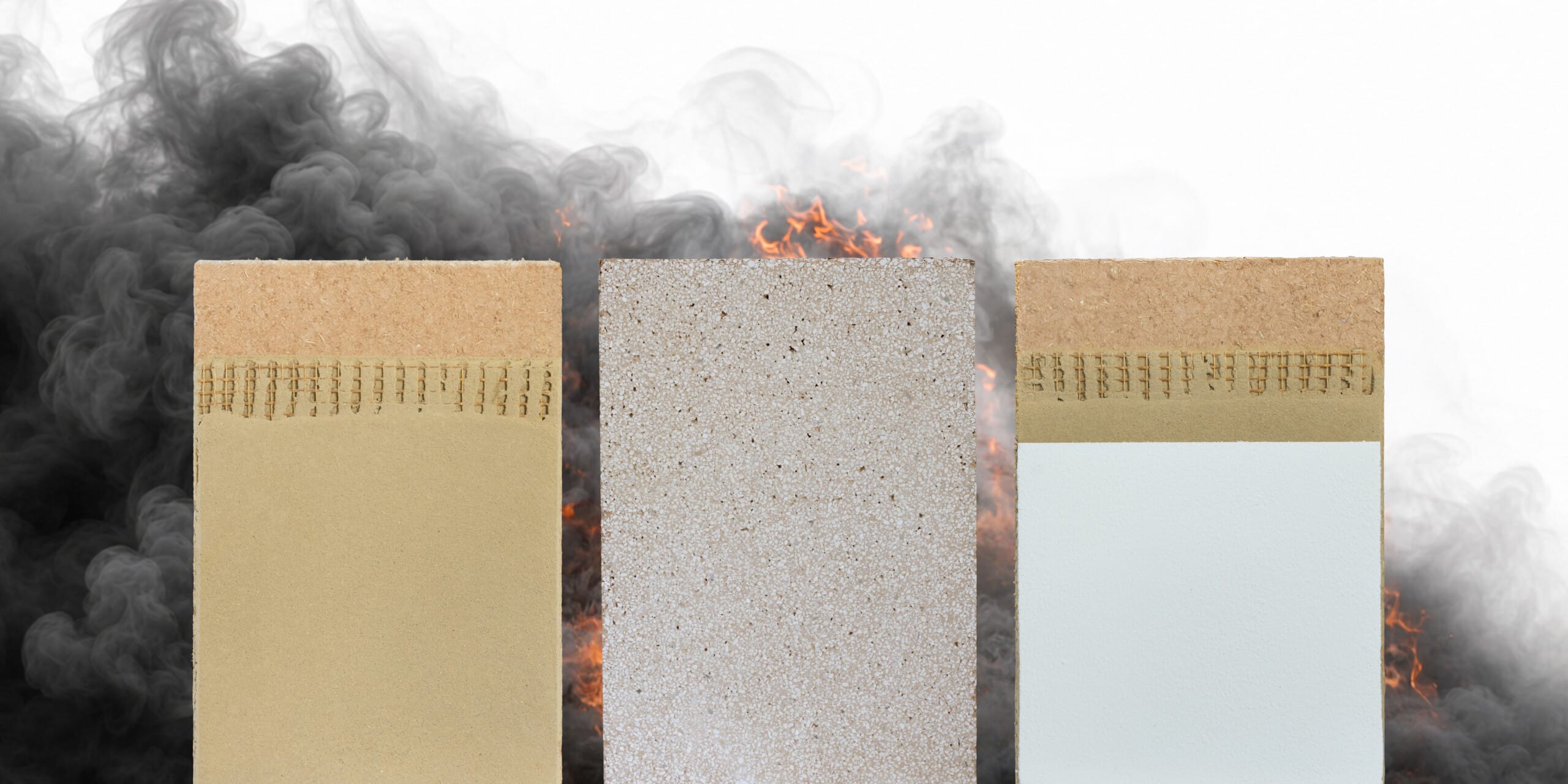
And what about fire protection?
Modern timber construction is becoming more climate-friendly – yet when it comes to fire protection, many projects still rely on emission-intensive interior construction systems.
ClayTec shows that there is another way.
With approved clay building and fire protection systems, ClayTec provides solutions that combine safety, planning reliability and resource-efficient materials.
Developed for modern timber construction.
Tested to meet the highest fire protection requirements.
Designed for the transformation of the construction industry.
The solution: Fire protection without compromise
As the first provider of ecological drywall systems, ClayTec has developed three solutions for demanding fire protection applications.
Join our free webinar (available in German only) on October 14, 2026 (12:00–2:00 p.m. CEST) and discover the solutions in detail.
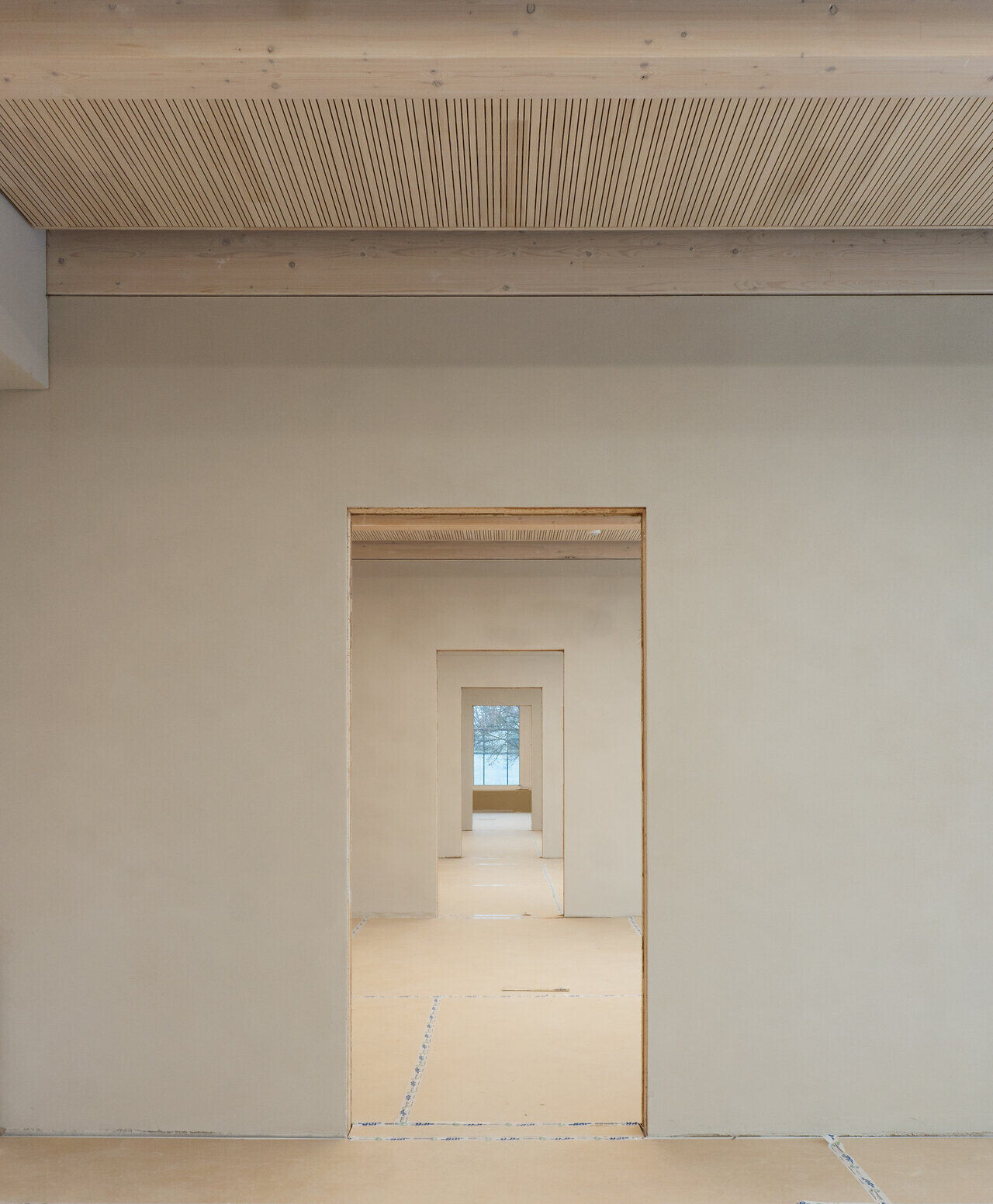
Fire resistance of timber stud walls
For partition walls subject to fire protection requirements, a specific period of time in minutes is defined depending on the required performance. During this period, the wall must neither lose its structural stability nor allow excessive temperatures to reach the side facing away from the fire.
In the German standard, this so-called fire resistance is designated by the letter F; internationally, the classification EI is used for non-load-bearing walls. ClayTec has carried out a range of tests to verify the fire protection performance of its partition wall systems.
Partition wall F60 / EI60
For a timber stud partition wall, ClayTec now provides not only a test report but also proof of suitability for use in the form of a general building authority test certificate (abP). For the first time, this makes it possible to design and construct walls using clayboards that meet fire protection requirements without requiring project-specific approval, and to have them accepted by the building control authorities.
Tested construction for:
 F30 / EI30
F60 / EI60
The general building authority test certificate (abP) is expected in the fourth quarter of 2026.
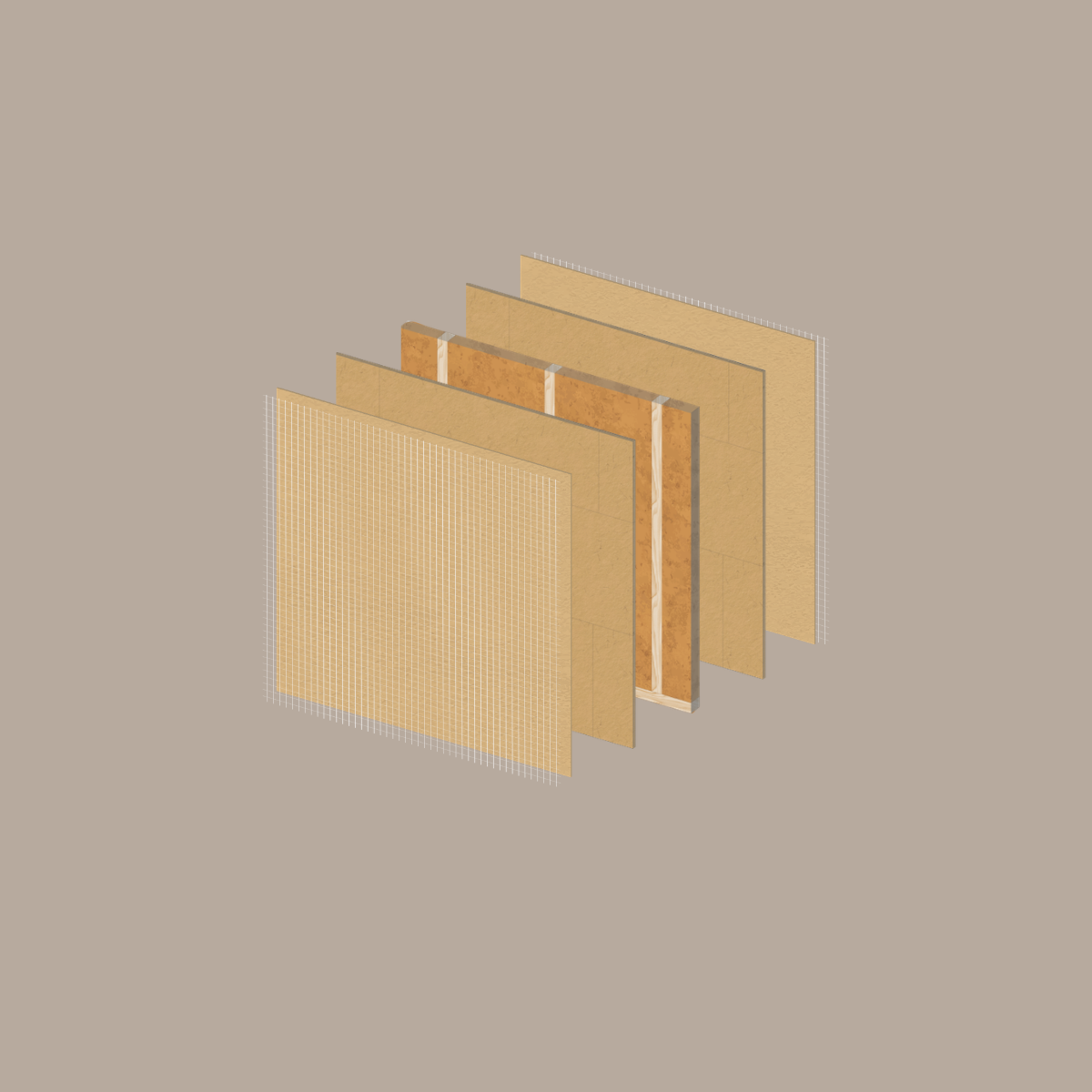
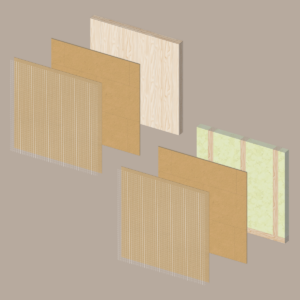
System build-up:
- Timber stud frame, 60 × 80 mm
- Clayboard heavy D22
- Clay adhesive and reinforcing mortar
- Glass mesh 112 fire protect
Fire protection cladding in timber construction
According to the building regulations of the German federal states and the Model Timber Construction Directive, F60/REI60 and F90/REI90 components in timber frame and solid timber construction generally have to be fitted with fire-protective cladding. The fire protection cladding must consist of non-combustible building materials and prevent the ignition of load-bearing, bracing and compartment-forming components made of timber or wood-based materials for a sufficient period of time (tch ). ClayTec now offers solutions for multi-story timber construction, particularly for building classes 4 and 5. The fire protection systems were tested as part of the DBU-funded “BeClaydung” research project conducted by the German Clay Building Materials Association and the TUM School of Engineering and Design.
Standard solution: tch = 30 minutes
The ClayTec Clayboard heavy D22 protects timber and wood-based components behind the cladding system for at least 30 minutes before the onset of ignition and charring.
Suitable for load-bearing timber structures in residential buildings or in buildings with occupancy units of up to 200 m² gross floor area:
- Solid timber components (F90/REI90)
- Timber frame components (F60/REI60)
System build-up:
- Solid timber or timber frame component (without/with wood-based panel)
- Clayboard heavy D22
- Reinforcement layer consisting of ClayTec Clay topcoat fine 06 (d = 6 mm) and glass mesh 112 fire protect
Innovation for the highest requirements: tch = 90 minutes
The newly developed ClayTec Clayboard heavy D22 fire protect protects timber and wood-based components behind the cladding system for at least 90 minutes before the onset of ignition and charring.
Suitable for load-bearing timber structures in buildings with occupancy units of 200 m² gross floor area or more:
- Solid timber components (F90/REI90)
- Timber frame components (F90/REI90)
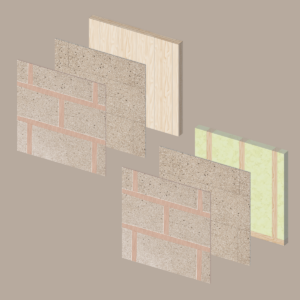
System build-up:
- Solid timber or timber frame component (without/with wood-based panel)
- ClayTec Clayboard heavy D22 fire protect, double-layer cladding
- Joint reinforcement consisting of Clay adhesive and reinforcing mortar and glass mesh 112 fire protect
The innovation: ClayTec Clayboard heavy D22 fire protect
The material principle
As a water-soluble building material that can be reused indefinitely, clay has great potential to reversibly bind other building materials and components. Thanks to clay, other materials do not have to end up as waste, but can remain within the material cycle – without any additional energy input.
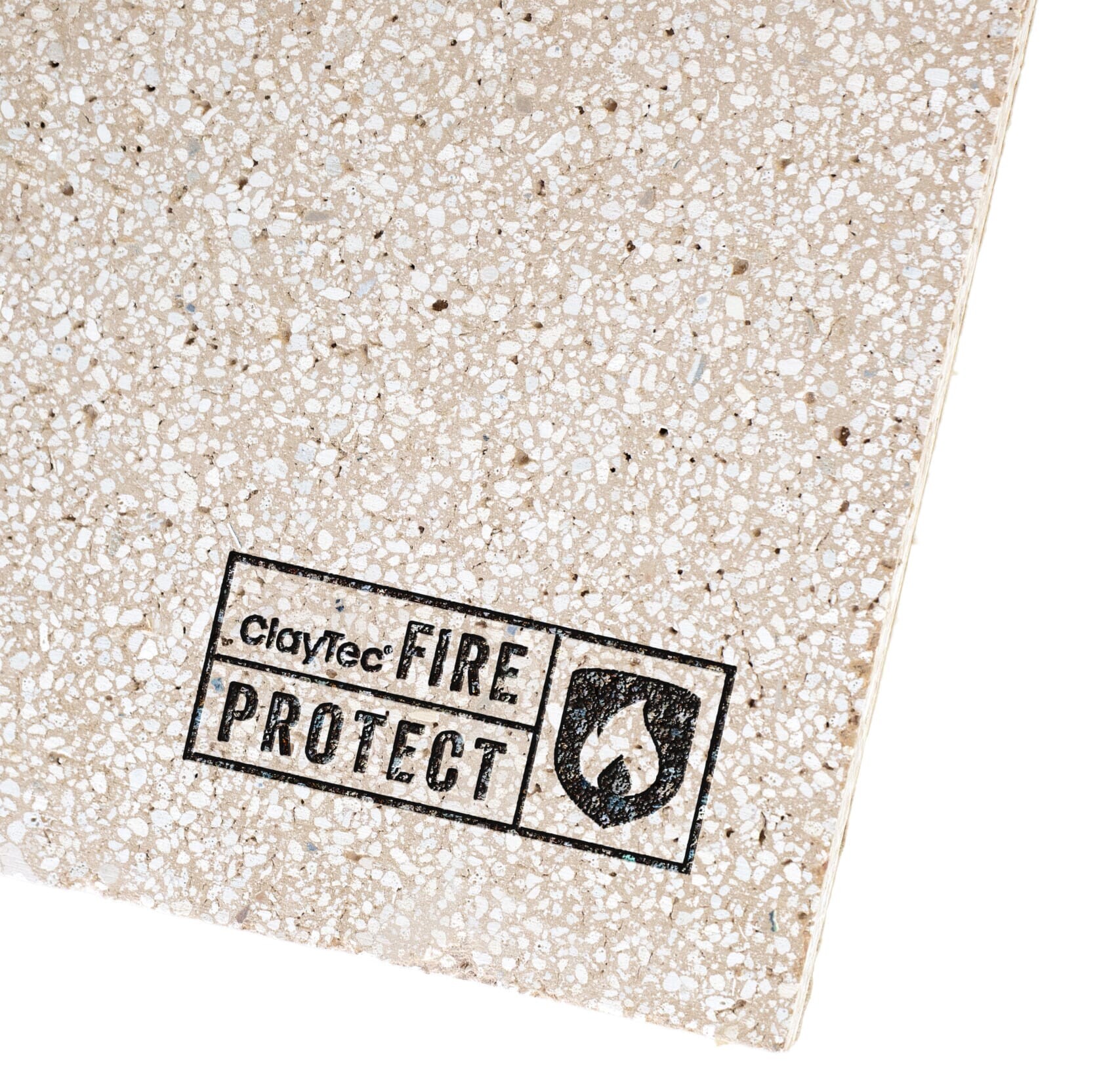
ClayTec applies this principle to the new ClayTec Clayboard heavy D22 fire protect, in which two mineral and non-combustible materials work together: clay as an unfired binder, and recycled gypsum in granular form, which is incorporated into the board without requiring another firing process.
Clay:
- dried without the use of fossil energy
- the only building material that becomes stronger when exposed to fire
Recycled gypsum:
- granulate recovered from construction and demolition waste
- proven fire protection material thanks to its chemically bound water of crystallization
The manufacturing principle
Circularity first
The ClayTec Clayboard heavy D22 fire protect has been designed with circularity at its core. Clay remains permanently water-soluble and can be processed into new building products any number of times. At the same time, the clay makes it possible to wash out, recover and reuse the gypsum granulate contained in the board. In this way, recycled gypsum can be reused without any additional energy input for a firing process and kept within the material cycle.
The ClayTec Clayboard heavy D22 fire protect is also the first ClayTec clay building board for which ClayTec has committed to taking back the product after dismantling. Further information will be available here shortly.
Low-carbon production facility
At ClayTec, the clayboards are dried using solar energy, similar to the ClayTec clayboard D22 solar. The production machinery is powered by energy from renewable sources.
Behavior in the event of fire
 The chemically bound water of crystallization is released, slowing down heat penetration.
 The recycled gypsum loses its strength. At the same time, the clay is fired into a ceramic material.
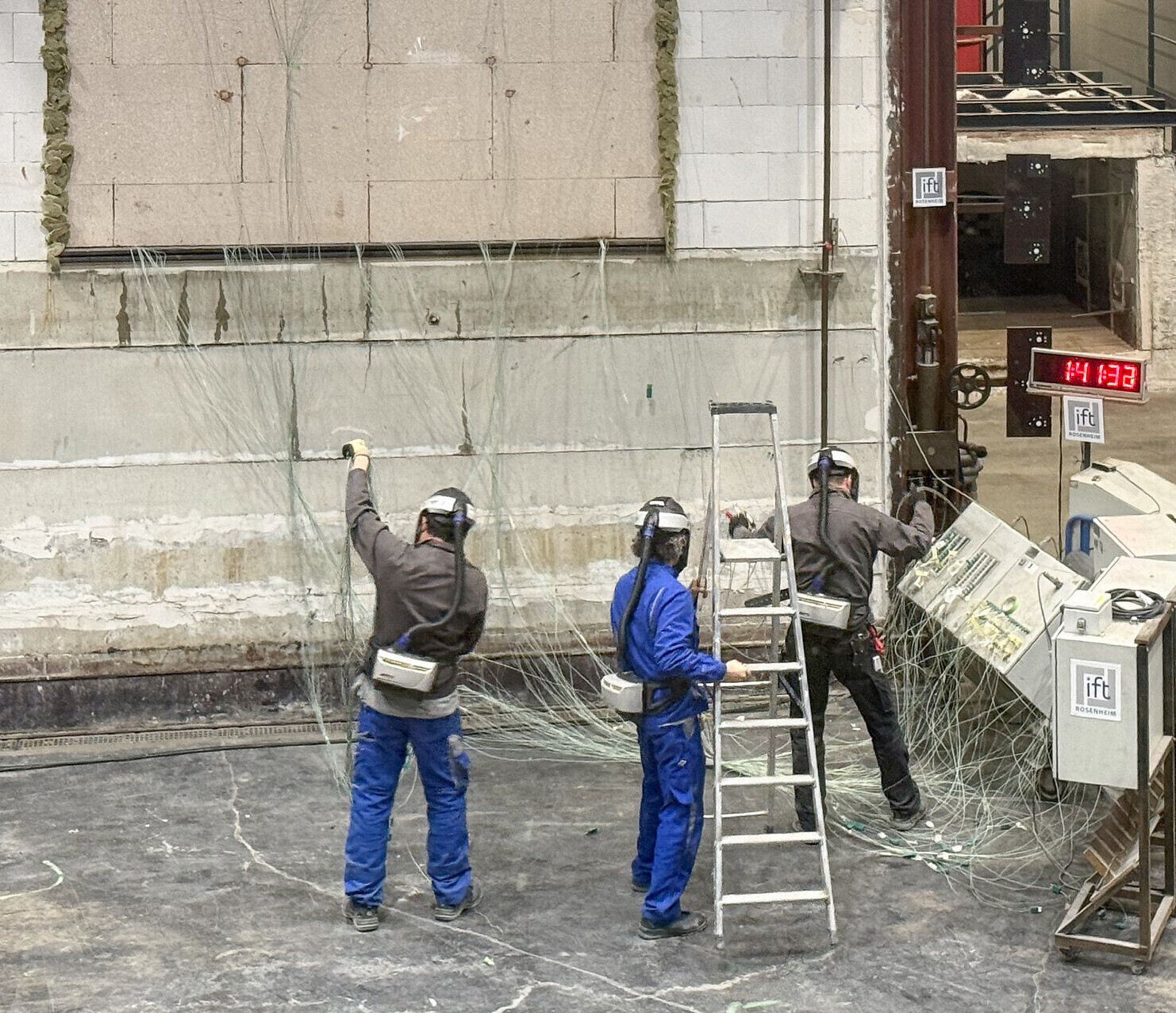
Photo: Even after more than 90 minutes, the cladding remains in place in front of the timber component as a stable, large-format “tile”.
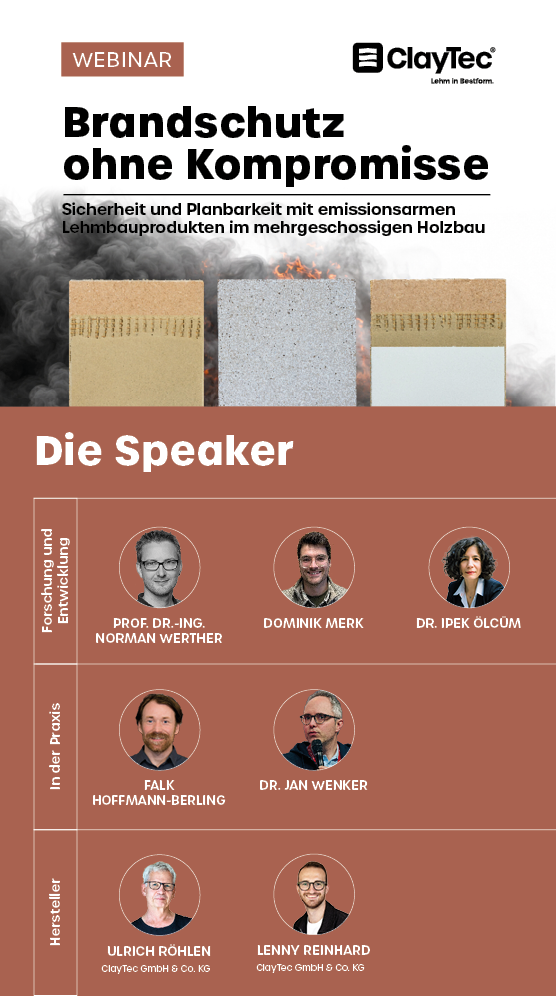
Register for the webinar now!
Fire protection without compromise – safety and planning reliability with low-emission clay building products in multi-story timber construction
October 14, 2026, 12:00–2:00 p.m. CEST
(available in German only)
In this webinar, together with leading experts from research and practice, we will explore how demand for low-emission materials is developing, which requirements the MHolzBauRL (Model Timber Construction Directive) sets for fire-protective cladding, what evidence is required to realize compliant constructions using clay building materials, and which properties make clay building products particularly effective in terms of fire protection.
The webinar is aimed at architects and engineers specializing in timber construction and fire protection, as well as anyone looking to build expertise in these fields.
Speakers:
- Prof. Dr.-Ing. Norman Werther, Architecture and Civil Engineering, Augsburg University of Applied Sciences
- Dominik Merk, Research Associate at the Chair of Timber Engineering and Building Construction, Technical University of Munich
- Dr. Ipek Ölcüm, Managing Director, German Clay Building Materials Association
- Dr. Jan Wenker, Group Director Sustainability & Innovation, Brüninghoff GmbH & Co. KG
- Falk Hoffmann-Berling, Head of Structural Engineering, Construction & Building Physics, Ripkens Wiesenkämper Ingenieure GmbH
- Ulrich Röhlen and Lenny Reinhard, Technical Management, ClayTec GmbH & Co. KG
The ClayTec Clayboard heavy D22 is the proven standard for ecological drywall construction. It has been tested for fire protection and therefore provides an additional level of safety in buildings.
Whether used in private or public buildings, timber construction or solid construction, the Clayboard heavy D22 brings all the benefits of clay into the building:
- buffers peaks in humidity
- supports a comfortable indoor climate
- provides summer heat protection thanks to its thermal storage mass
- improves sound insulation
At temperatures above 100°C, clay and, in particular, gypsum release chemically bound water. This delays the penetration of heat from the fire. While gypsum loses strength in the process, the clay is fired into a ceramic material and forms a stable matrix.
In testing, the cladding remained in place as a solid protective layer in front of the timber components even after 90 minutes. For fire protection, this means that the mechanical protective effect is maintained for significantly longer than a defined number of minutes alone would suggest.
The secret lies in the board’s composition, combining a specially developed clay formulation with recycled gypsum. Recycled gypsum (RC gypsum) is processed gypsum recovered from construction and demolition waste. It is bound within the board by the clay without requiring an additional firing process.
Clay is a non-combustible mineral material that hardens simply through drying. Unlike other building materials, clay becomes stronger when exposed to fire: due to its clay mineral content, it is fired into a ceramic material, similar to the process used in brick production.
Gypsum has long been a proven material in fire protection and is well known for its non-combustibility and fire-retarding properties. These are primarily due to the chemically bound water contained within its mineral structure, commonly referred to as structural water or water of crystallization. Gypsum occurs naturally and is also produced as flue gas desulphurisation gypsum (FGD gypsum) in coal-fired power plants.
Recycled gypsum normally has to be fired again before it can be processed into new products. With the ClayTec Clayboard heavy D22 fire protect clay building board, this energy-intensive step is eliminated: the gypsum is added directly to the clay in granular form, and the board gains its strength through drying. At ClayTec, this drying process uses solar energy, resulting in a correspondingly low Global Warming Potential (GWP) – close to zero. As clay is water-soluble, the gypsum granulate can later be washed out, recovered and reused.
Avoiding waste and fossil energy sources is one of the guiding principles of product development at ClayTec. We explore where clay building products can replace products that require large amounts of energy to manufacture. We also use the outstanding properties of clay not only to keep the clay itself in the material cycle, but also to help keep other building products and materials in circulation.
Fire resistance classes such as F30, F60 or F90 describe how long a building component continues to perform its required function in the event of fire: for load-bearing and bracing components, this refers to the structural stability of the building; for compartment-forming components, it refers to the stability of the individual partition wall, the limitation of heat transfer and resistance to the spread of fire.
By contrast, tch indicates the point in time at which charring of the timber begins behind a cladding system. It therefore describes the fire-protective effectiveness of the cladding, which protects timber components from ignition or charring for a defined period of time.
The board will be available in larger quantities during the course of 2027.
The non-load-bearing partition wall with F60 / EI60 was tested in accordance with the European standard EN 1364-1 in conjunction with EN 1363-1.
The fire protection systems with clay boards and clay plaster as cladding of timber components have been tested in accordance with the European standard EN 13381-7.
The test reports can be used within the EU. The test results can be used in combination with other European standards, such as Eurocode 5 (EN 1995-1-2).
Please contact us, if you would like to learn more about the use of these solutions outside of Germany!


